Fear Speeches
Viernes, 9 de Diciembre, 2016
DISCOURSES OF HATE
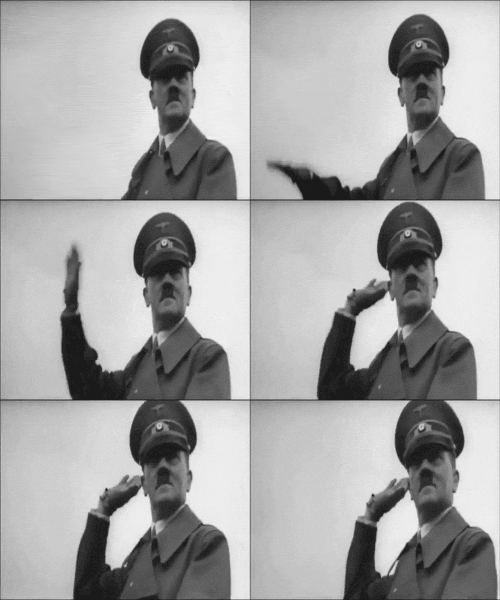
Throughout history, different discourses have been made to segregate groups of society. My purpose in this text, is to relate two testimonials, one made by an American lady in Michigan justifying her voting for Donald Trump, taken from: www.humansofnewyork.com. And a script taken from the movie “Goodbye Bafana”, in which Gloria Gregory tries to justify the Apartheid system of South Africa to her husband. The relation will be made in the light of the hate speeches used in Europe, Africa and America for instance, speeches written by George Wallace: “Segregation Forever”, or Richard Spencer, the president of the NPI and alt-right leader. To begin with, I want to talk about one of the most influential and well known speech made by the leader of the Nazi Party that ruled Germany through dictatorial means from 1933 to 1945 or during the Holocaust, Adolf Hitler.
I want to highlight that the German economy during the 1930s after the stock market collapsed on Wall Street in 1929 was especially vulnerable since it was built upon foreign capital, it was mostly loans from America and was very dependent on foreign trade. When those loans came due and when the world market for German exports came to it’s end, the German oiled industrial machine froze. As production levels fell, German workers were laid off. Along with this, banks failed throughout Germany. The result of years of hard work, were instantly wiped out. Inflation soon followed making it hard for families to purchase expensive necessities.
Adolf Hitler blamed the jews for Germany's economic depression because they controlled many important industries and expert fields. He successfully persuaded a big part of Germans to believe this, with the help of Joseph Goebbels.Goebbels was the district administrator of the Nazi Party in 1924, and two years later, Hitler made him district leader in Berlin. In 1927, Goebbels founded Der Angriff or "The Attack", a weekly national Socialist newspaper. The following year, Hitler appointed him to be in charge of posting propaganda for the Nazis.
Once installed, Goebbels began punctuating it with huge rallies with the purpose of converting the German people to Nazism. With time, he became a figure to be feared, especially by the Jews, who were now targets of the Nazi Party. Jews weren’t hit hard by the collapse as they were wealthy. To Hitler, it appeared as a massive injustice that had to be revenged.
It’s easy to persuade someone if one knows just the right thing to say. If something is shown as a threat to society, people immediately buy this idea even though it may not be true. Having this idea clear, I will start talking about the two testimonials mentioned above.


This is the first testimonial, made by the lady of Michigan: “Don't get me wrong, I want everyone to get along. And I don’t want to sound racist. But they are coming into our country. If you ask me, that makes them racists. There is something going on with the Muslims and Latinos. There is a lot we don’t know about. They have a game plan. They want my grandchildren to work for them. They want all the business. I’m hoping he can do something about it. We need someone to say no.”
The second testimonial taken from the script of “Goodbye Bafana”: “They don’t want to share this country with us. They hate us! If they had it their way, they’d drive every single person into the sea. They’d leave us with nothing. Not even the clothes on our backs.”

To relate the testimonials, the following quote, written by Goebbels must be taken into account: “A lie told once remains a lie but a lie told a thousand times becomes the truth”. The exact same concept has been repeated over and over again by different and also very influential people at the time. The statements are heard so many times, until they are believed. This is a cause for those two testimonials to be written. A similarity between the people who started saying this was that they wanted to protect their land, and as a matter of fact, South Africa was initially of the Blacks; and suspected that anyone that wasn’t from their land, race or religion were trying to steal from them and take over all they own or even kill them. Both authors of the testimonies seek for someone to stand up for them and reject the people that are “different” in the name of the whole country or continent.
In conclusion, the power retainers use the “fear discourse” to take control. What people don’t see is that for example by moving to the U.S, the intentions of a Mexican is not to take over, it is to have a job opportunity. Or that maybe black people don't want to “throw all people into the sea” and take their resources, they just want to be equal, as said in the Freedom Charter that was a prohibited document at the time.

Bibliography:
-
http://www.holocaustresearchproject.org/holoprelude/jewishquestion.html
-
http://www.jewishgen.org/ForgottenCamps/General/TimeEng.html
-
http://www.historyplace.com/worldwar2/riseofhitler/begins.htm
-
https://www.brainyquote.com/quotes/quotes/v/vladimirle132031.html
-
http://www.biography.com/people/joseph-goebbels-9313998#early-life
-
Search All the GIFs & Make Your Own Animated GIF. (n.d.). Retrieved February 13, 2017, from http://giphy.com/
Jueves, 9 de febrero de 2017
In English class, we made a review on an article.
'The people are so beautiful!' That's enough of the colonial tourism, is an article that was published by S.E Smith on The Guardian (https://www.theguardian.com/commentisfree/2014/apr/08/people-beautiful-colonial-tourism-travel).S.E. Smith, is a writer who lives and works in northern California, covering social justice issues. She also runs the This Ain't Livin' website (http://meloukhia.net), and has a personal web page (http://realsesmith.com).

This article is about S.E Smith’s opinion on colonial tourism and her dislike regarding how residents from different destinations are referred as “beautiful people” or “nice people” by travelers. At the beginning of the article, S.E Smith mentions the term “noble savage” when stating: “I don't want to travel to meet 'noble savages' but to enhance my understanding of the world in a responsible way”. Noble savage, in literature, is an idealized concept of uncivilized man, who symbolizes the inborn goodness or existing from birth goodness of one not being exposed to the corrupting influences of civilization.
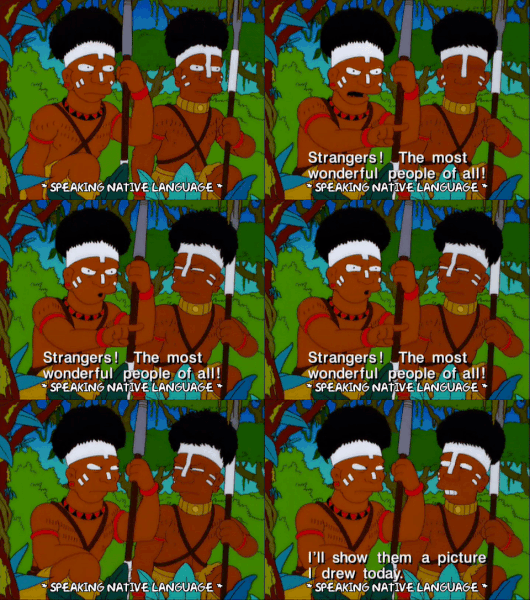
Smith highlights that responsible travel should not involve objectification, which is not to deny that positive experiences happen while travelling, but it's possible to do so in a way that is not offensive. By objectification she means to treat someone as an object rather than as a person. She uses the following example: "my homestay hosts were really nice and it was great to be able to experience home life for a few days", rather than "the people are just so beautiful and warm!".

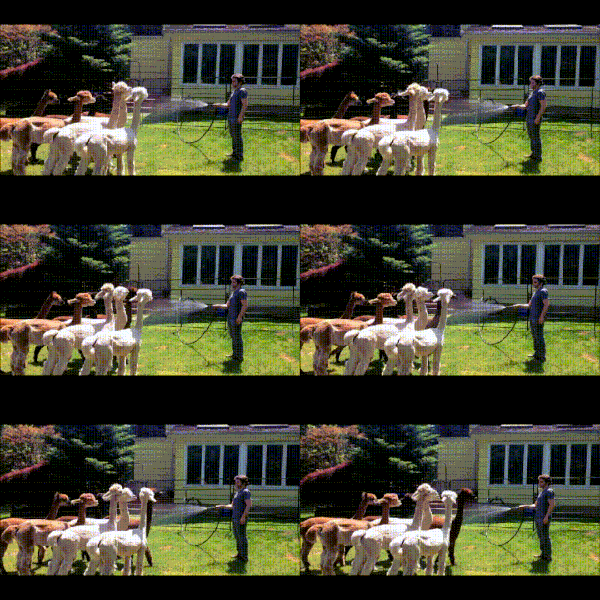
Even though I consider she makes really good points, I have to disagree with one of her statements: “The people who describe human beings in this way often have scores of pictures, including images obviously taken without consent that discomfited the subject.” The reason why I disagree, is because the images one takes of people are not always without permission. Smith limits to saying that some people actually live economically out of tourists taking pictures of them. For example in Perú, there are women who dress in their typical costume and hold alpacas, which is a very common animal in Perú. The women encourage tourist to take pictures in exchange for revenue even though they don’t always mention that they will charge you until you hit click on you camera (personal experience). So who’s the noble savage now!
I want to mention this statement she makes which I completely agree on: “Who are "the people"? While you're drooling over Indian women in saris at the produce market, are you paying attention to the women organising against mining companies and western intrusions in India?” She then says that one must instead accept the critical along with the welcoming, the angry along with the sweet, the righteously infuriated along with the abject and humiliated people. Us, as occasional tourist, when we see something or someone that we are not used to seeing or we find unusual on a trip we usually come up with some common phrases such as: “so cute”, or “She’s or he’s beautiful”. I realize now that we do put aside the realities of each individual and instead focus on the more appealing one.

Colonial tourism is not a often mentioned topic, so I find Smith’s article very valuable for travelers, or immigrants. It is important that people become aware or realize that the life you superficially choose to see in a “beautiful person” is completely different that the life they already have.
Links
Search All the GIFs & Make Your Own Animated GIF. (n.d.). Retrieved February 13, 2017, from http://giphy.com/
https://global.britannica.com/art/noble-savage
https://www.theguardian.com/commentisfree/2014/apr/08/people-beautiful-colonial-tourism-travel
https://www.merriam-webster.com/dictionary/objectify
http://www.learnersdictionary.com/definition/objectify
Sábado, 10 de marzo de 2017
How specific time and place determine the social and cultural construction of identity?
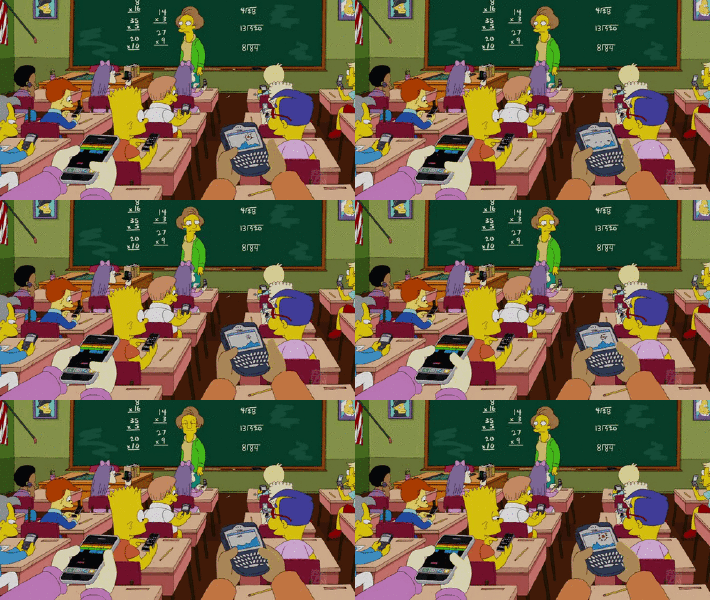
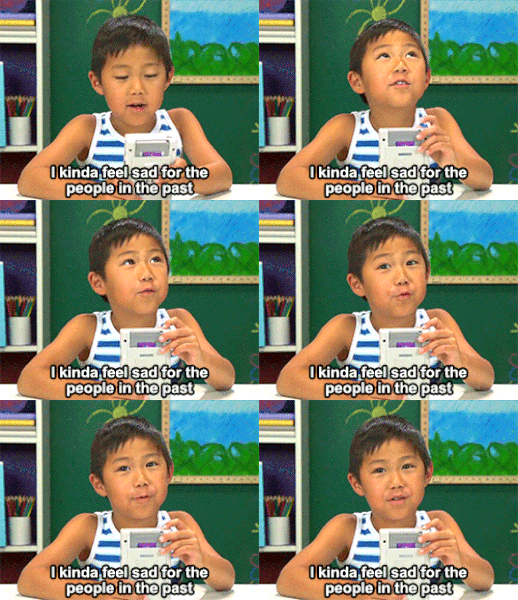
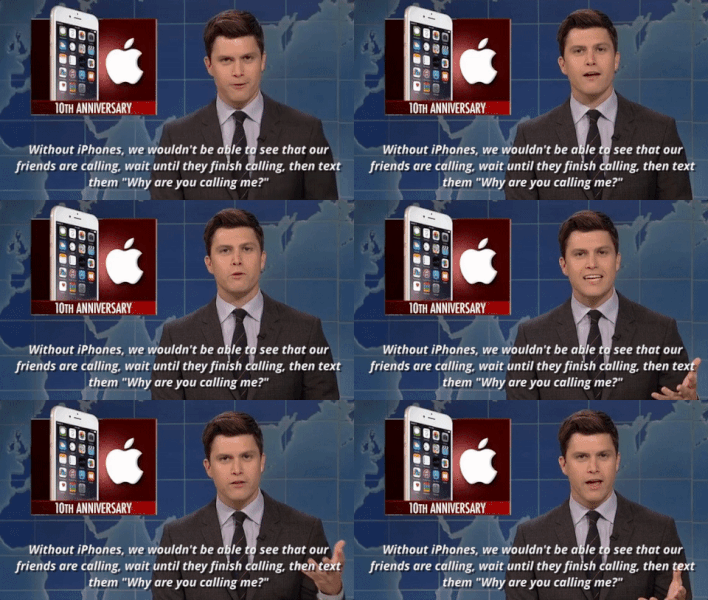
Time and place can help in the construction of personal and group identity, depending on different factors, for instance technology and how advanced it is, and also what the city, country or continent’s reality is at the time and how society expresses it. In a society in which technological advances are happening constantly, we become dependent on it. If we look back, for instance to the 17th century, technology was not a crucial part of identity, but from the 18th century ahead, it has had a great influence on the way we act, see the world, work, communicate, etc. Nowadays, most people wonder what they would do without an iphone or a computer. If we look back ten years ago, passing from using a map, to using a GPS, travelling has become easier for most of the societies. If we look back to the 90s, the first digital camera was made, and so on. In short, innovation has changed our role and way of seeing the world and ourselves.

What is the role of artistic manifestations in the construction of the social and cultural identity?
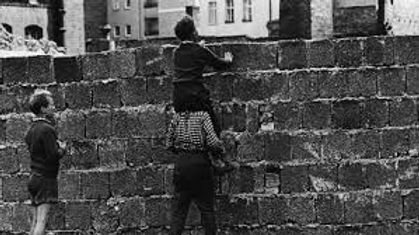
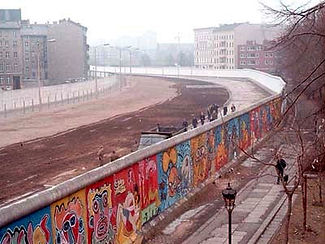
Also, artistic manifestations have helped in the construction of cultural and social identity because artists, usually create pieces of art taking into account the country's context at the time they create it. If there is peace, artists do not tend to paint violent images or war based pieces. Using art, feelings and messages are transmitted and I consider that people and of course I, “listen” to art. These artworks have influenced our identity. For instance, manifestations of society in Berlin show how art is reflected in the reality of the country: The Berlin Wall.
1961 2017
How does the creation of your album or cover help you constructing your own identity as a member of Latin-American community?
Creating this song reflected how me and my partner understand and see the Latin American identity because crating the lyrics I could see that we only included positive aspects about our country's reality and we realized how much we appreciate it. For example this fragment of the lyrics:
“Colombia es amor
Colombia es pasión
Colombia es todo lo que quiero yo
Colombia te dio la patria de amor
Colombia es más que solo un lugar…”
We are really proud of being Latin Americans.